
Exploring the World with a Desi Heart (and a Celiac Gut)
Sharing our useful tips to travel locally in India and Globally as a person with celiac disease
GLUTEN FREE TIPS
Divya Dawar
2/23/2026
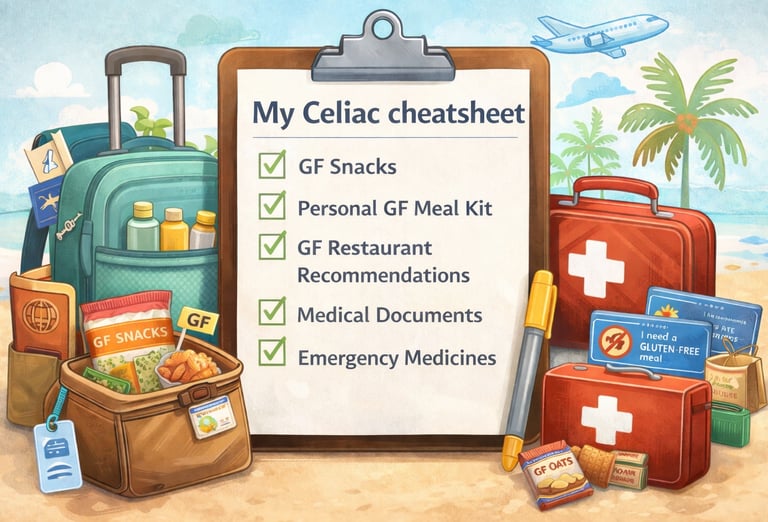
Namaste, fellow travelers! If you’re an Indian living with celiac disease, you know the struggle isn’t just about avoiding bread; it’s about navigating a culture where "thoda sa maida" (a little refined flour) is often seen as harmless.
Traveling within India is a vibrant experience, but for a celiac, the "land of roti" can feel like a gluten minefield. However, because our diverse regional cuisines rely heavily on rice, millets, and lentils, India is actually one of the best places to travel—if you know how to navigate the kitchen.
Here is how to expand your celiac strategy for domestic Indian travel.
🍛Regional "Safe Havens" vs. "Danger Zones"
The risk levels change significantly as you cross state borders:
South India (The Gold Standard): Most traditional breakfasts like Idli, Vada, and plain Dosa are naturally GF (fermented rice and urad dal).
The Trap: Avoid Rava Dosa (semolina) and Upma. Always ask if they add a "spoon of maida" to the dosa batter for extra crispiness—some hotels do.
West India (Gujarat/Maharashtra/Goa): Safe: Sabudana Khichdi, Poha, and Thalipeeth (if made with Bhajani flour, but confirm no wheat mix).
The Trap: Many Gujarati snacks like Dhokla or Khandvi are safe (gram flour), but some modern versions use semolina.
North India (The Challenge): This is the heart of wheat culture.
Safe: Makki ki Roti (Corn) or Bajra Roti (Millet) are great alternatives to Naan.
The Trap: Hing (Asafoetida) is used in almost every dal. Most commercial hing is 50–70% wheat flour. In the North, it's safer to ask for "Bina hing ka tadka" (tempering without hing).
North East India (The Seven Sisters): In the North East, rice isn't just a side dish; it’s the foundation of almost every meal.
Safe: Jadoh (Meghalaya): A Khasi specialty made of red rice cooked with pork or chicken. Galho (Nagaland): A nutritious "soupy" rice dish similar to khichdi but made with local greens and smoked meats., Pakhala (Assam/Manipur): Fermented rice or simple steamed rice served with mashed vegetables (Iromba) or fish, Bamboo Shoot & Smoked Meats: Most traditional gravies use bamboo shoot juice, fermented soy (Akhuni), or local herbs as thickeners rather than maida.
The Trap: Momos, Thukpa and chowmein. Alternates to Momos are Phalay (if made with buckwheat) or Shaphalay only if specified GF. For Thukpa, you may find gluten free rice noodles for swap or have clear soup with rice (safest bet)
The Mountains: This is where the Maggi dominates as altitude rises but the local cuisine helps.
Safe: Daal and Rice, Potato curries, Rajma Chawal, pulao or biryani mostly safe but look for Hing trap.
The Trap: Hing (Asafoetida) is used in almost every dal. Momos and Maggi become popular in the more touristy hilly areas, carry gluten free instant noodles or poha for such places.
✈️ Flying Domestic (IndiGo, Air India, Akasa)
Unlike international flights, domestic Indian "low-cost" carriers have very limited GF options.
Air India: On full-service domestic routes, you can pre-book a GFML (Gluten-Free Meal). It usually consists of plain rice, a dry vegetable/chicken, and fruit.
IndiGo/Akasa: Their "6E Tiffin" or buy-on-board menus are heavily sandwich and wrap-based. Do not rely on them. * Smart Move: Buy a tin of Haldiram’s Roasted Makhana or a box of Nutty Gritties at the airport. Most Indian airports now have "Forest Essentials" or "FabIndia" stores that sell clean, grain-free snacks.
🚂 The Indian Railways (IRCTC) Strategy
Trains are the trickiest part of Indian travel.
Avoid the "Bread/Cutlet" Breakfast: The standard IRCTC breakfast is bread slices and a veg cutlet (bound with breadcrumbs).
The Safe Bet: Order the Omelette (check that they don't serve it on the bread) or stick to Curd Rice if available.
E-Catering: Use the IRCTC Food on Track app. You can order from reputable brands or local restaurants that deliver to your seat. Look for "Rice-based" thalis and explicitly put "No Hing/No Wheat" in the delivery notes.
🏨 The "Five-Star" Advantage
If you are staying at major chains (Taj, Oberoi, ITC, Marriott), the chefs are usually very well-trained.
The Executive Chef Intro: Upon check-in, ask to speak to the Executive Chef. They will often go off-menu to make you Jowar Rotis or GF Pasta.
The "Separate Tawa" Request: In smaller hotels, explain that your food cannot be cooked on the same tawa (griddle) where they just toasted parathas. Ask them to use a clean frying pan instead.
🛍️ GF Brands Stock Up
If you are traveling to remote places or doing long drives with only access to dhabas you cannot rely on, always stock up GF food and snacks of reliable brands for your travels. All major Indian cities have the GF options now easily available on stores.
🗣️ The "Celiac Hindi" Cheat Sheet
Keep these phrases ready for local dhabas and restaurants:
"Mujhe Gehun se allergy hai" (I am allergic to wheat).
"Kya isme Maida ya Suji hai?" (Does this have refined flour or semolina?).
"Bina Hing ke banayein" (Please make it without Asafoetida).
"Ise alag bartan mein pakayein" (Please cook this in a separate utensil).
Traveling abroad can actually feel liberating for Indians because labeling laws are often stricter, but it requires a unique "Desi strategy." Here is how to take your love for travel global without compromising your health.
1. The "South Indian" Advantage
As Indians, we have a secret weapon: our natural cuisine. When traveling, if you’re overwhelmed by local menus, look for South Indian restaurants.
Safe Bets: Plain Idli, classic Dosa (check for Rava/Semolina), and Appam are usually naturally gluten-free as they use fermented rice and lentil batter.
The "Hing" Trap: Be careful with Sambhar. Authentic Hing (Asafoetida) is often processed with wheat flour. In high-end places, ask if they use "pure hing" or skip the sambhar and stick to coconut chutney.
2. Decode the "Bideshi" Menu
When you’re in Europe or the US, the terms change, but the risks are similar to home.
Maida = All-Purpose Flour / Wheat Flour: This is in everything from white sauces to roux-based gravies.
Sooji = Semolina / Couscous: Common in Mediterranean salads.
Dalia = Bulgur / Cracked Wheat: Often found in "healthy" grain bowls.
Pro-Tip: If you are in South East Asia (Thailand/Vietnam), your biggest enemy is Soy Sauce, which contains wheat. Carry a small travel-sized bottle of Tamari (gluten-free soy sauce) in your bag to stay safe while enjoying street-side stir-fry.
3. Language is Your Best Friend
In India, we explain "No Gehun/Atta." Abroad, "Gluten-Free" is a recognized term, but cross-contamination (the "same tawa" problem) is still a hurdle.
Use Translation Cards: Use cards that specifically mention "Gluten Free (GF), No Wheat, Barley, or Rye" in the local language (French, Spanish, Japanese, etc.).
The "Chef Talk": In Indian culture, we often talk to the server. In international fine dining, ask to speak to the Sous Chef. They are trained in allergens and will take you more seriously.
4. Packing Your "Emergency Dabba"
A true Indian traveler never leaves home without snacks. For a celiac, this is a survival necessity.
The Purity Protocol: Pack Roasted Makhana, Chivda (made of Poha), and Khakhra (specifically made from Jowar or Bajra).
The Savior: Carry "Ready-to-Eat" GF packets (like Poha or Upma, but always verify the latest labels for the "Gluten Free" logo).
5. Top 3 Celiac-Friendly Destinations for Indians
If you want a holiday where you don't have to explain yourself every five minutes:
Italy - Believe it or not, Italy is the world leader in Celiac safety. Every pharmacy sells GF pasta, and most restaurants offer "Senza Glutine" options.
Thailand - Rice is the staple. Sticky rice, rice noodles (Pad Thai), and coconut-based curries are naturally safe (just watch the soy sauce!).
Australia - Some of the world’s strictest labeling laws. If a menu says "GF," it actually means zero parts per million.
Recovery Protocol
Even with the best planning, a "Glutening" can happen. Carry a Medical Certificate from your gastroenterologist. In many countries, this allows you to carry your own food into theme parks or stadiums where outside food is normally banned. (Call or email the park and event management in advance to confirm before carrying your food to the venue)
Traveling with Celiac doesn't mean you can't see the world; it just means you're a more "refined" explorer. Happy (and safe) wandering!
Connect
Questions, stories, or feedback? Reach out!
© 2026. All rights reserved.